
Description
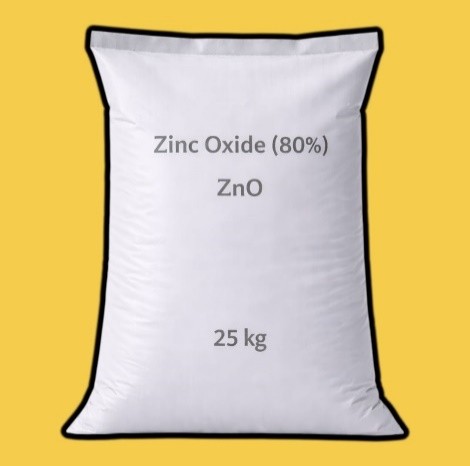
Zinc Oxide is an inorganic, white, odorless powder widely used in industrial, pharmaceutical, cosmetic, rubber, ceramic, paint, and water treatment applications. It is insoluble in water but reacts with acids and alkalis. Zinc oxide is known for its high chemical stability, UV-absorbing ability, antibacterial properties, and thermal resistance.
Key Features:
- High purity white powder with excellent brightness
- Chemically stable and resistant to heat and light
- Amphoteric nature – reacts with both acids and alkalis
- Excellent UV absorption and UV protection properties
- Antibacterial and antifungal activity
- Non-toxic and safe when used as recommended
- Insoluble in water, but soluble in acids and strong bases
- Good thermal conductivity and heat resistance
- Acts as an effective activator in rubber vulcanization
- Provides corrosion resistance and surface protection
- Supports heavy metal precipitation in wastewater treatment
- Functions as a micronutrient source in biological processes
Applications:
- Rubber & Tyre Industry : Used as an activator in vulcanization to improve strength, elasticity, and durability of rubber products.
- Paints & Coatings Industry : Used as a white pigment, corrosion inhibitor, and UV-resistant additive for long-lasting coatings.
- Pharmaceutical Industry : Used in ointments, creams, and lotions for its antiseptic, soothing, and skin-protective properties.
- Cosmetic & Personal Care Industry : Used in sunscreens, baby creams, and cosmetics as a safe UV blocker and skin protectant.
- Ceramic & Glass Industry : Improves glaze finish, thermal resistance, and mechanical strength of ceramic and glass products.
- Water & Waste Water Treatment Industry : Used for heavy metal precipitation, odor control, pH stabilization, and as a micronutrient in biological treatment.
- Agriculture & Fertilizer Industry : Used as a zinc micronutrient to correct zinc deficiency and enhance crop growth.
- Chemical Industry : Used as a catalyst, raw material, and additive in various chemical formulations.
- Electronics Industry : Used in semiconductors, sensors, varistors, and advanced electronic components.
- Textile Industry : Used for antimicrobial finishing and odor control in fabrics.
- Plastic & Polymer Industry : Improves heat resistance, UV stability, and mechanical properties of plastics.
- Adhesives & Sealants Industry : Enhances bonding strength and durability.
Reviews
There are no reviews yet.